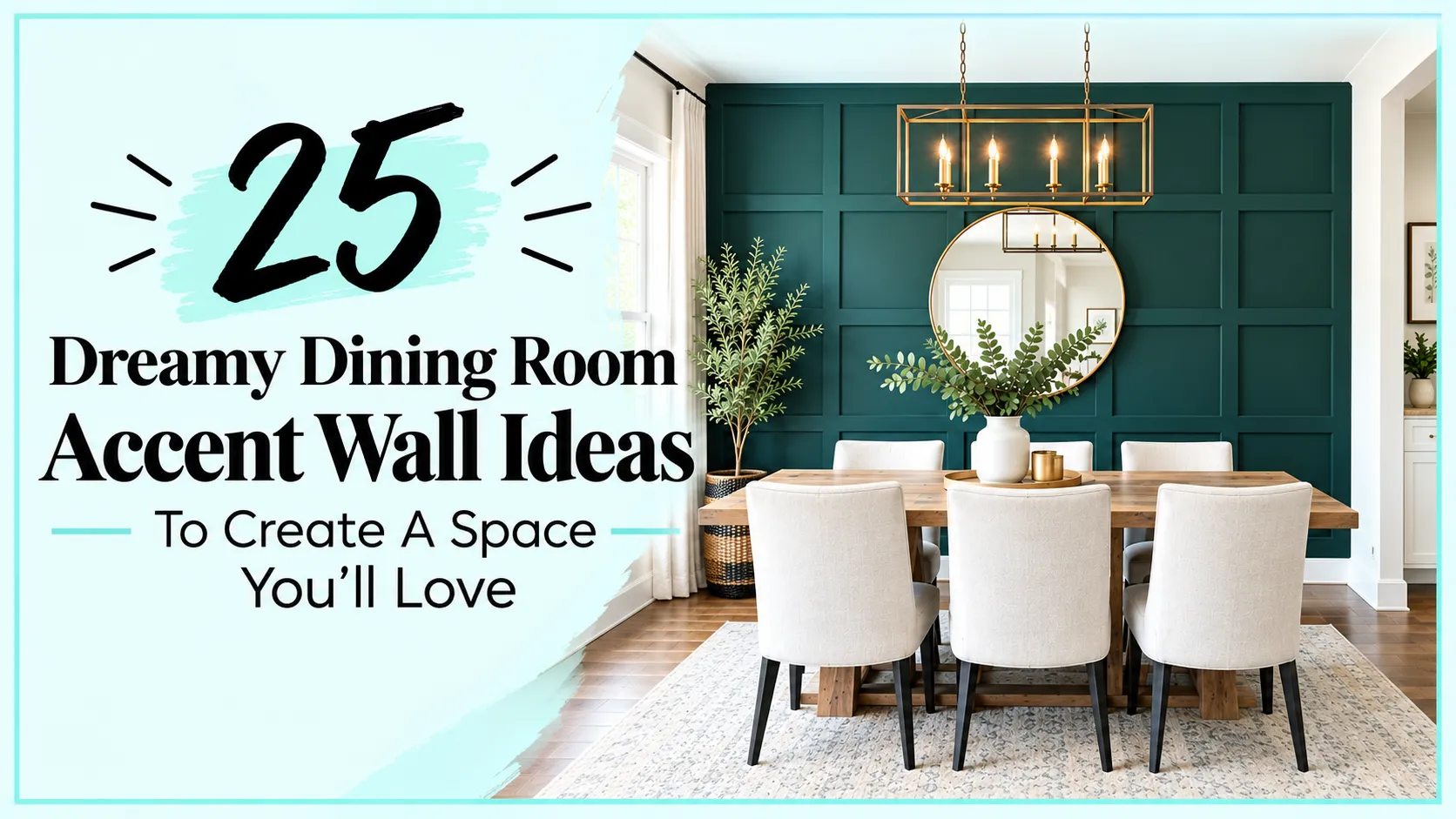
In dining rooms, one wall can change the whole feeling of the space. You don’t have to redo the whole room to see a marked difference. A dining room accent wall lets you play with color, texture, wood, wallpaper and art work.
Some ideas cost very little, while others need more time and materials. Start with the wall behind your dining table because it naturally draws attention. Here are five ideas you can try without making the room feel overdone.
1. Warm Terracotta Accent Wall
Terracotta can make your dining room feel warm, relaxed, and welcoming. It works especially well with wooden dining tables and cream-colored furniture. Paint the wall behind your dining table and keep the other walls light. This helps the warm color stand out without taking over the room.
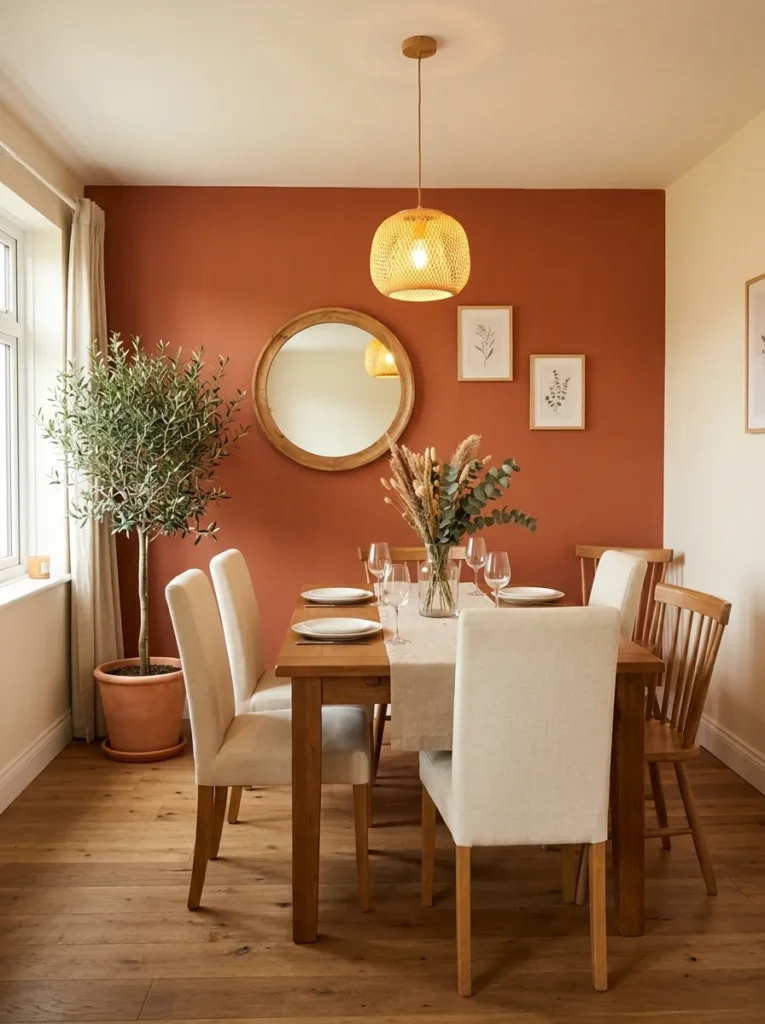
You can add a round wooden mirror or a few simple frames to finish the wall. Warm white lighting also works nicely with terracotta paint. If your dining room already has brown or natural wood furniture, this color can bring everything together without much extra work.
2. Classic Deep Green Wall
A deep green dining room accent wall can give your space a rich and comfortable feel. This shade works well with white, cream, brown, and natural wood furniture. Paint the wall behind your dining table for a clear focal point. Keep the remaining walls light so the room still feels open.
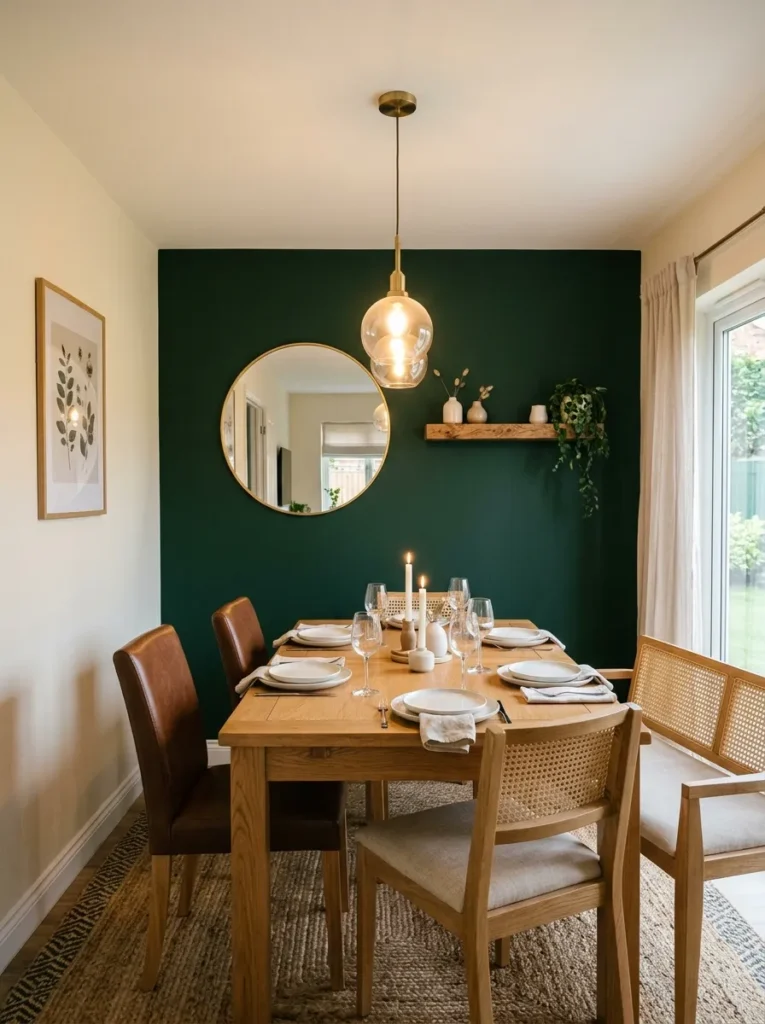
Warm lighting can make deep green look softer during dinner. You can also hang a large mirror, simple artwork, or a wooden shelf on the wall. Try not to fill every inch of the wall because the paint itself already creates plenty of visual interest.
3. Wood Slat Accent Wall
Wood slats can give your dining room plenty of texture without using a bold paint color. Install them on the wall behind your dining table for a strong feature. You can leave the wood natural or paint it in a shade that matches your furniture. The vertical lines can also make the wall look taller.
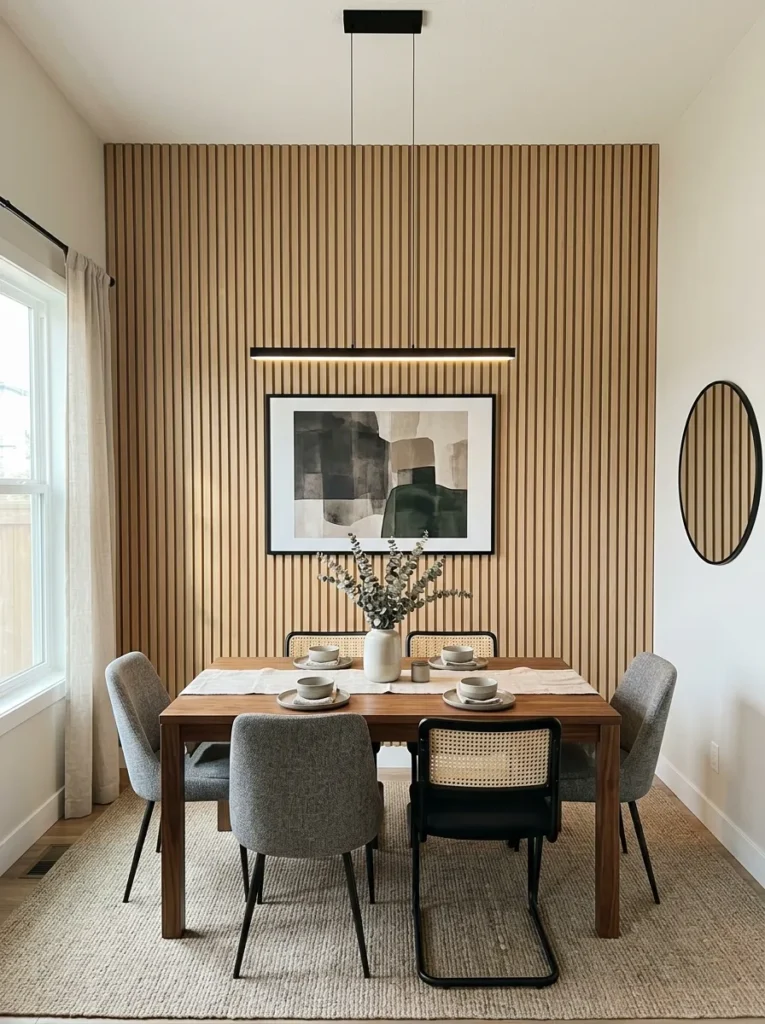
Ensure to measure the wall properly before fixing each slat in position. Maintain the gaps, as small mistakes can be easy to spot. You can finish the wall with a simple pendant light, artwork, or mirror. The result can look impressive without changing the rest of your dining room.
4. Wallpaper Accent Wall
Wallpaper gives you many ways to change a plain dining room wall. You can choose floral prints, simple patterns, geometric designs, or soft textured styles. Place the wallpaper behind your dining table to create a clear focal point. A simple pattern works well if your furniture already has strong details.
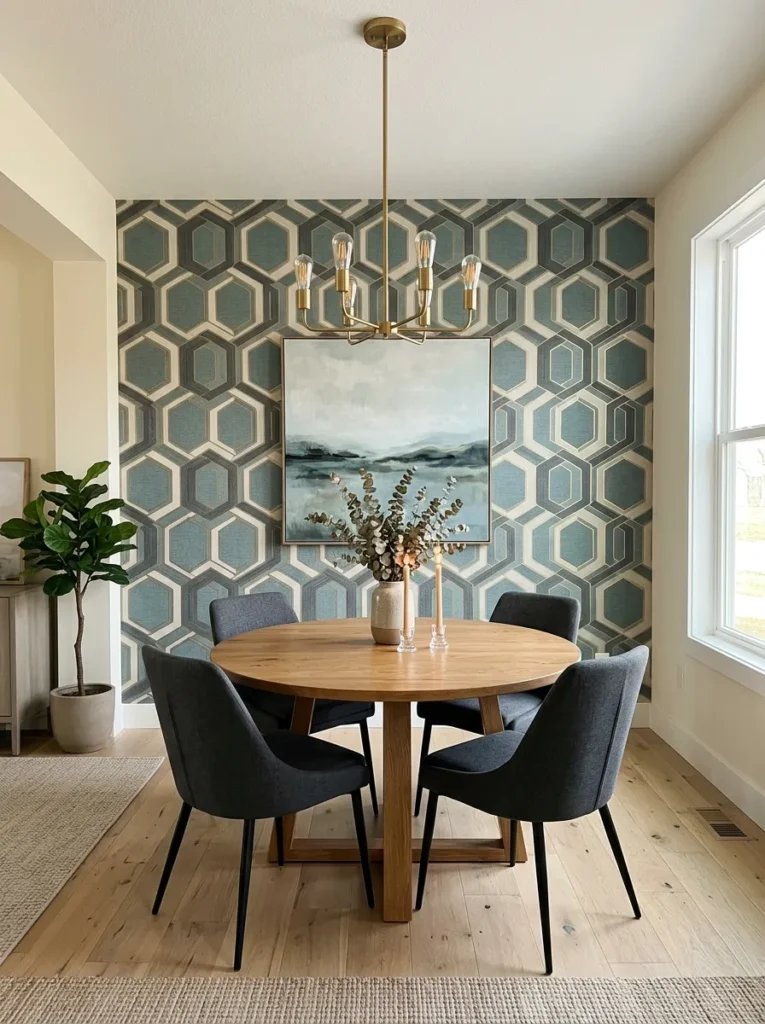
If you like changing your decor, removable wallpaper can make the project easier. Before applying it, clean the wall and repair any holes or uneven areas. Take your time when matching the wallpaper pattern. A neat installation can make an ordinary dining room look completely different.
5. Dark Blue Dining Room Wall
A dark blue accent wall can give a dining room a calm and stylish appearance. It looks great with white chairs, wooden furniture, brass details, and warm lights. Use the color on one wall instead of the entire room. This keeps the darker shade from making the dining area feel too closed in.
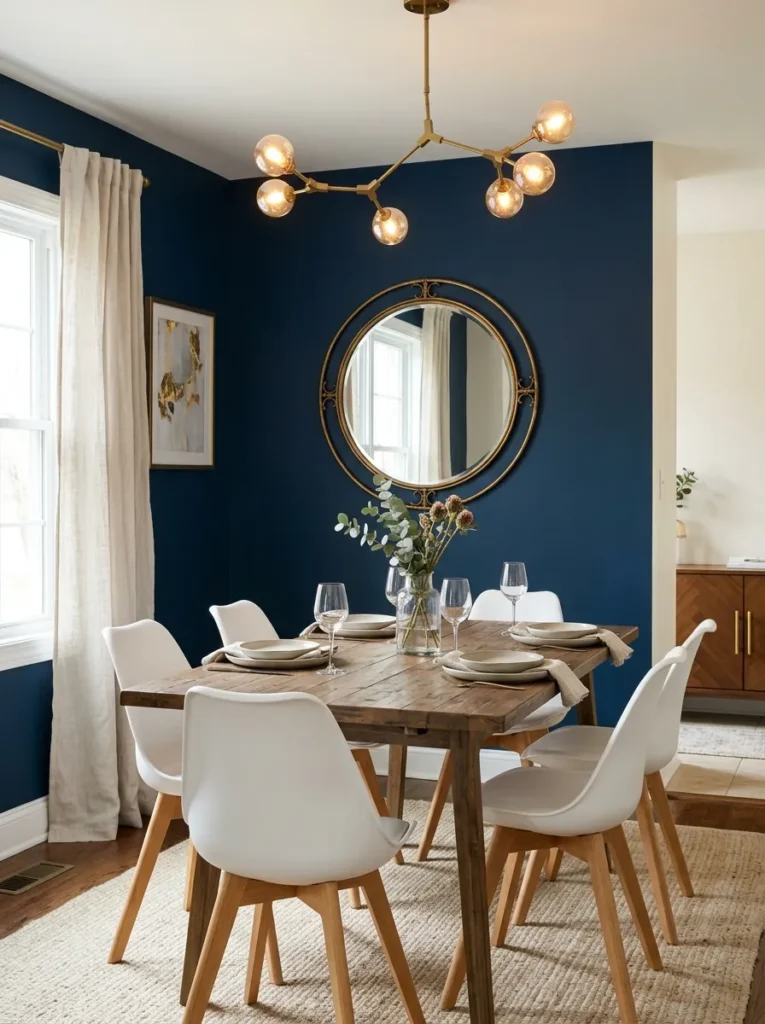
You can place a large mirror or framed artwork against the blue wall. Natural light can also help balance the darker color during the day. If the room has limited sunlight, choose warm bulbs and lighter furniture. This simple combination can create a comfortable dining space for everyday meals.
6. Board & Batten Accent Wall
Board and batten can add a crisp architectural detail to a bare dining room wall. You can create the pattern with narrow wood strips and paint everything in one color. White gives you a fresh look, while darker shades create more drama. This project works especially well on the wall behind your dining table.
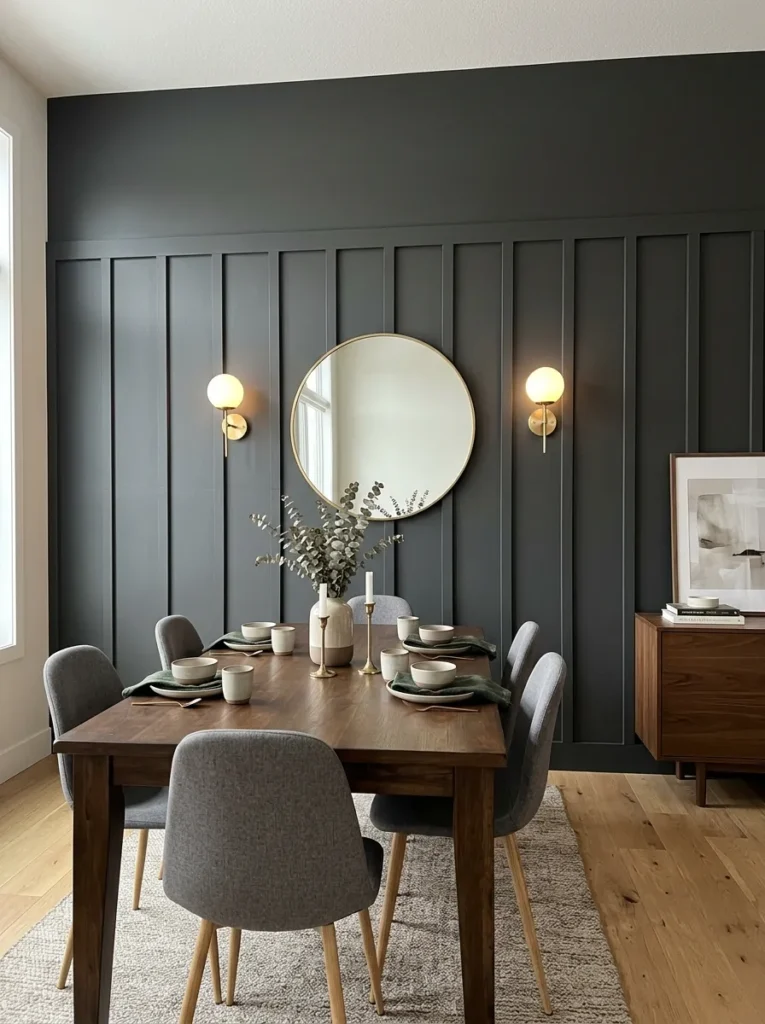
Measure the wall before buying your materials and mark every strip carefully. Keep the gaps even because uneven spacing can stand out after painting. You can use a simple level to keep each piece straight. Finish the wall with a mirror, artwork, or wall light for a polished look.
7. Exposed Brick Accent Wall
Exposed brick can give your dining room a warm and rustic character. Real brick works well when the existing wall can support it, but brick panels offer an easier option. Choose a wall behind the dining table to make the brick the main feature. Keep the other walls fairly simple.
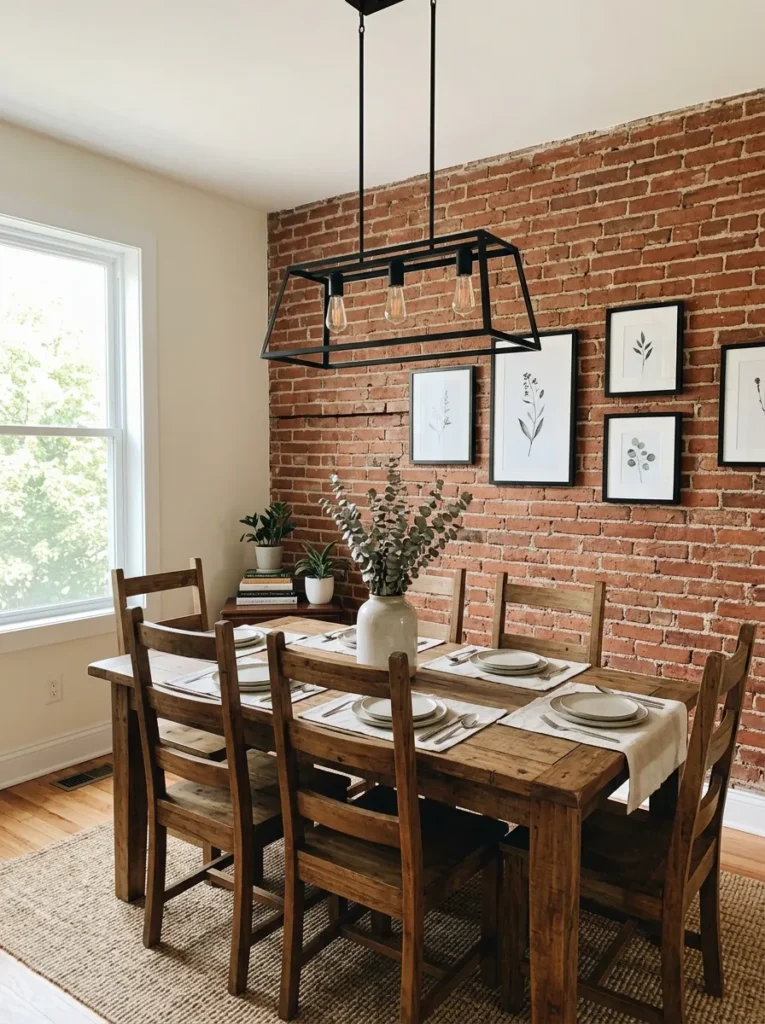
Wooden furniture looks natural against a brick accent wall. You can also add black metal lighting or simple framed artwork for more character. If real brick feels too heavy, choose thin brick veneer instead. Clean the surface carefully before installation so the finished wall looks neat.
8. Black Accent Wall
A black accent wall can make your dining room feel bold and modern. Use black on one wall while keeping the other walls white, beige, or light gray. This approach gives you the dramatic effect without making the entire room feel dark. The wall behind the dining table makes a natural choice.
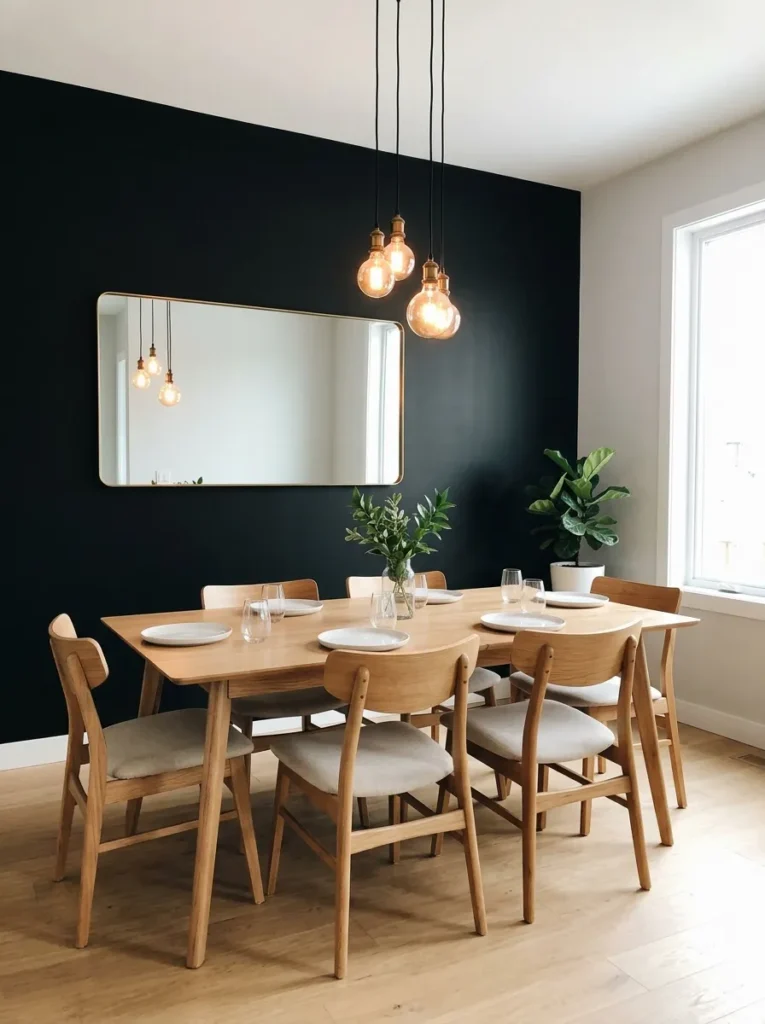
Natural wood furniture can soften the strong black color. You can also use a large mirror to reflect light across the room. Warm pendant lights can make the wall feel more comfortable at night. Choose a washable paint if your dining table sits close to the wall.
9. Soft Beige Accent Wall
Beige may sound simple, but the right shade can make a dining room feel warm and comfortable. Choose a beige that works with your flooring, table, and chairs. Paint one wall slightly darker than the remaining walls for a gentle difference. This idea works especially well in smaller dining rooms.
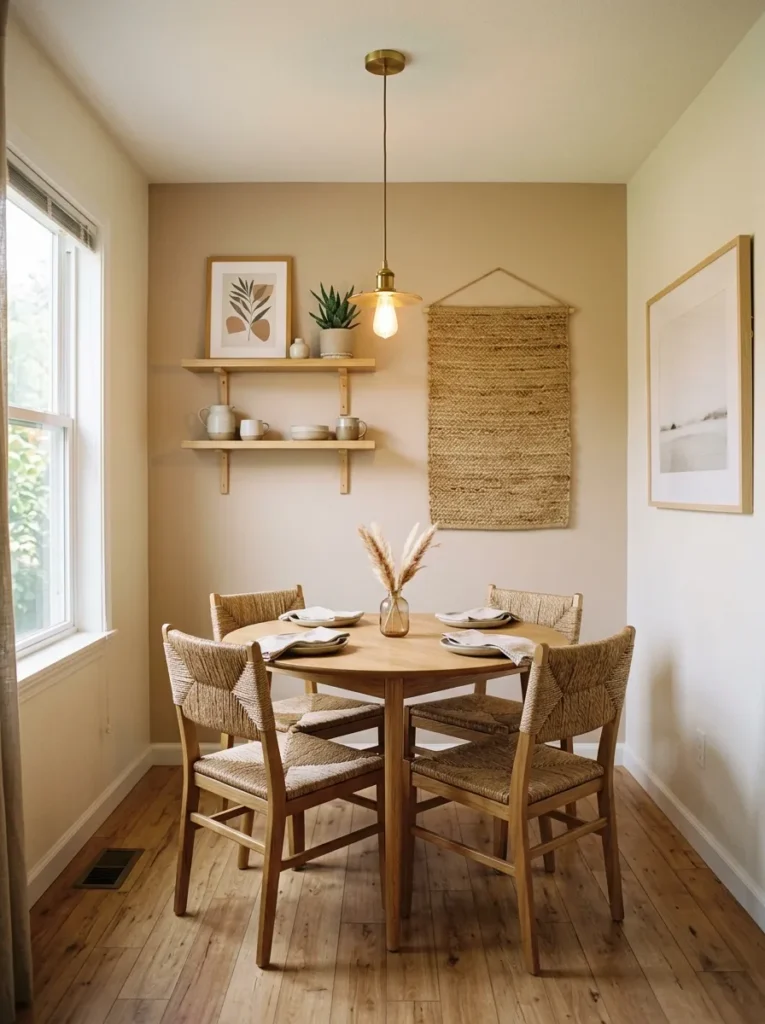
Use natural wood shelves, woven wall decor or a large framed picture to decorate the beige wall. You can also use warm white lighting to create a cozy dinner setting. If you prefer simple home decor, this accent wall can give you enough interest without looking busy.
10. Geometric Painted Wall
A geometric painted wall can turn a plain dining room into something much more playful. You can create triangles, arches, blocks, or simple lines with painter’s tape. Pick two or three colors that work well together. You do not need an artist’s skills to create clean shapes.
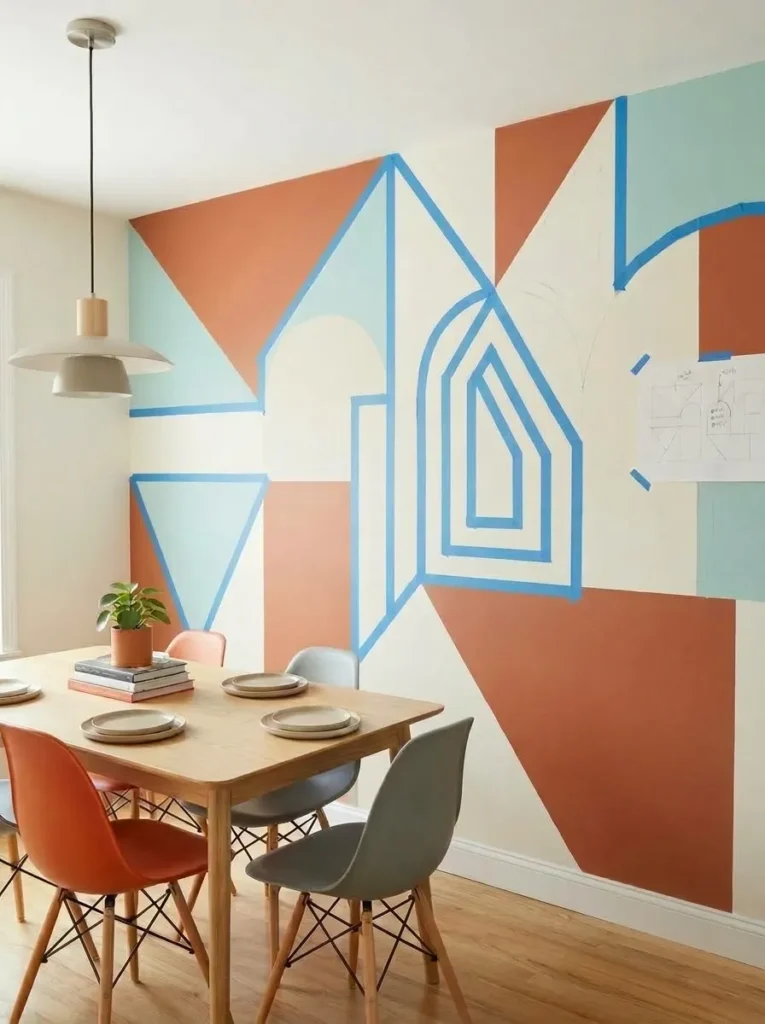
First draw your design on paper and tape it to the wall. Use a level and measuring tape to keep the shapes straight and balanced. Press the tape down firmly before painting each section. Remove the tape carefully while the paint remains slightly fresh for cleaner edges.
11. Floral Wallpaper Wall
Floral wallpaper can bring a softer decorative touch to your dining room. You can choose small flowers for a subtle look or larger patterns for a stronger statement. The wall behind your dining table provides a natural place for this design. Keep your table and chairs fairly simple when the wallpaper has many details.
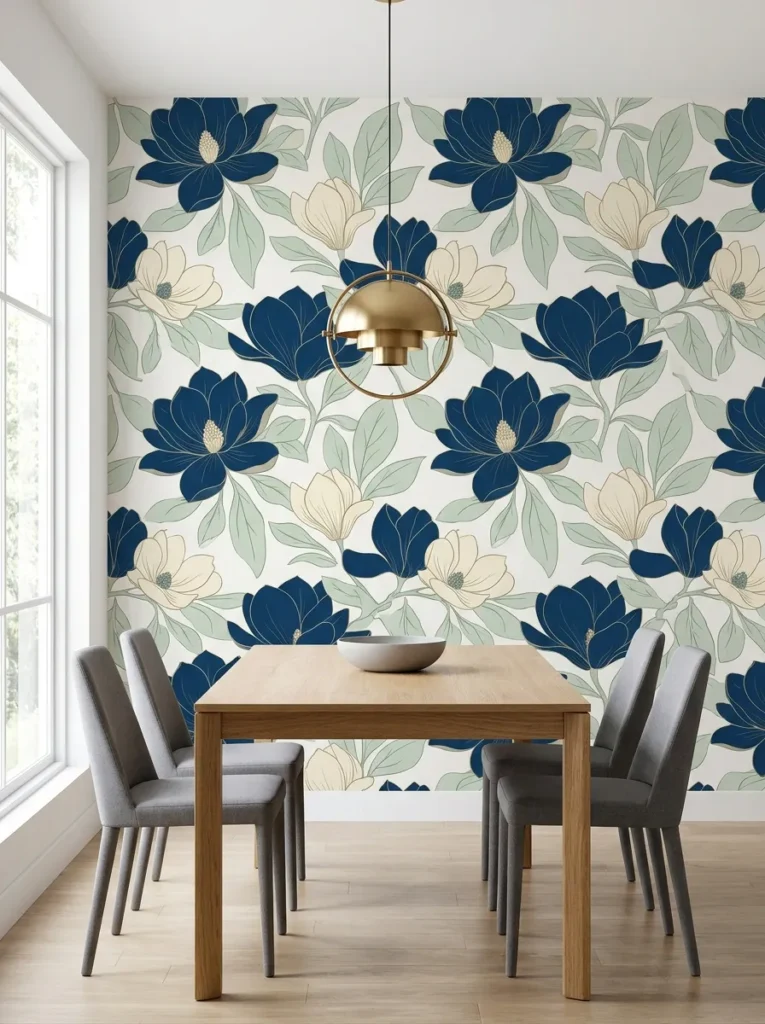
Look at wallpaper samples beside your dining furniture before making a final choice. Colors can look different under daylight and artificial lighting. Prepare the wall before installation by filling holes and cleaning dust. A smooth surface helps the wallpaper sit properly and gives you a cleaner finish.
12. Stone Accent Wall
A stone accent wall can add texture and a natural feel to your dining area. You can use stone veneer panels instead of installing full-size stone. This option usually requires less work and can create a similar visual effect. Use the wall behind your dining table if you want one strong feature.
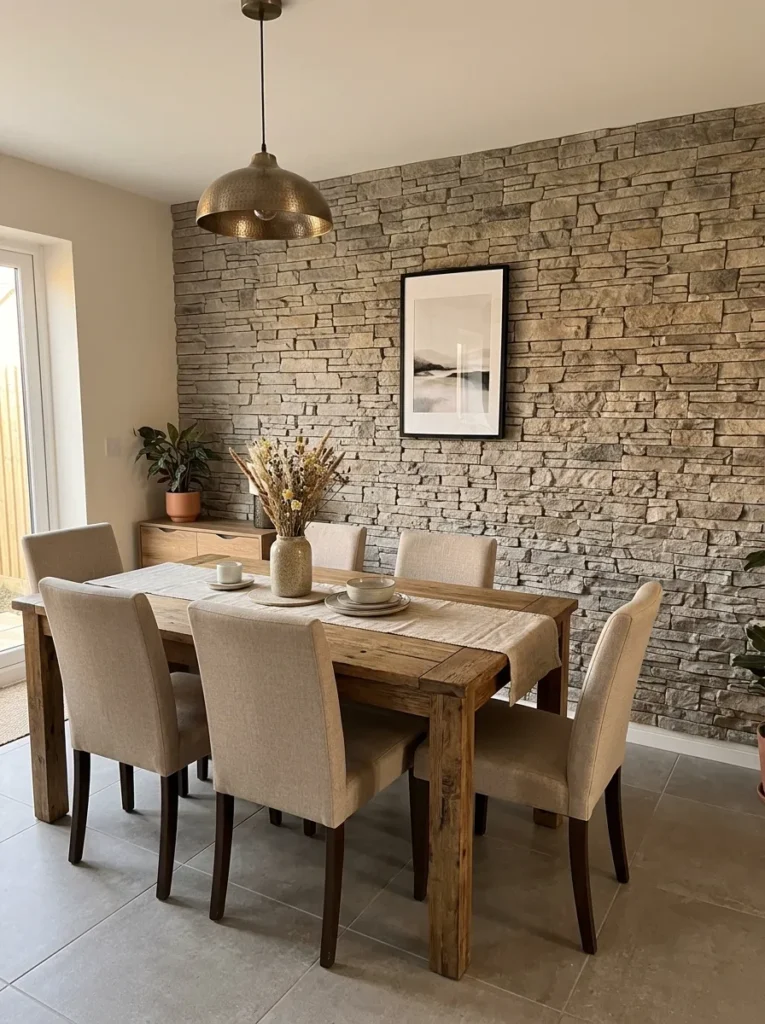
Stone colors should work with your flooring and furniture. Gray stone can suit modern furniture, while warmer stone tones work nicely with wood. Avoid placing too many decorative items on the wall. Let the stone texture provide most of the visual interest in the room.
13. Large Mirror Accent Wall
A large mirror can become the main feature of your dining room without requiring paint or wallpaper. Place one large mirror behind the dining table to reflect light and nearby decor. This can also make a smaller dining area feel more open. Choose a frame that matches your furniture style.
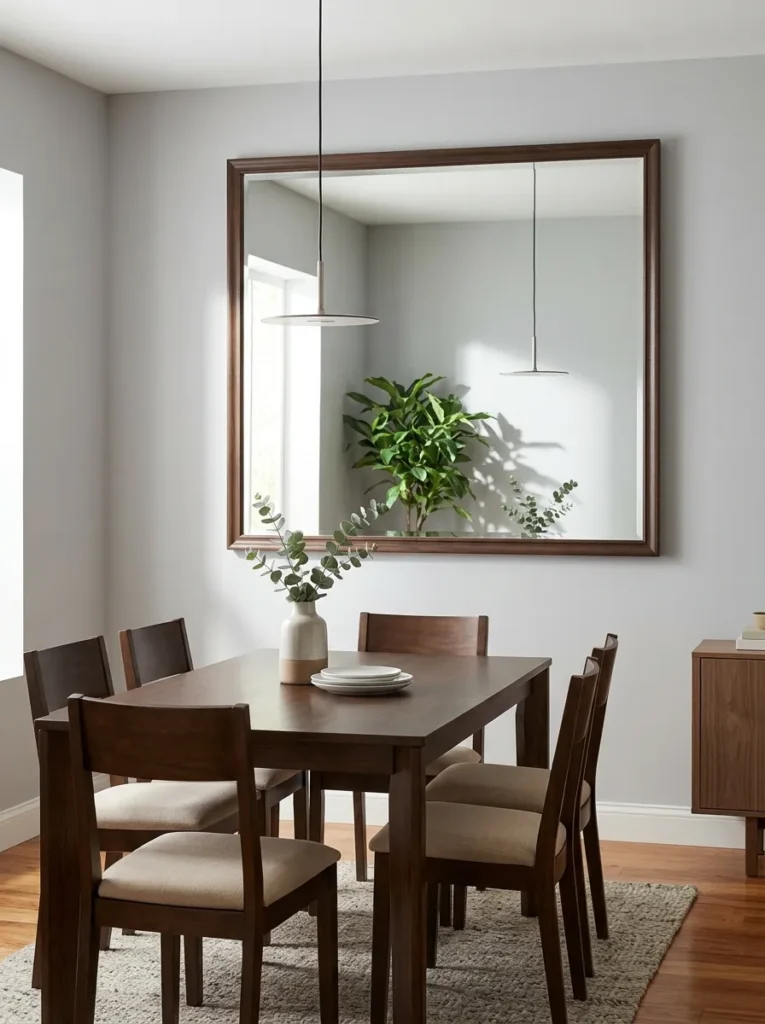
Before hanging the mirror, check the wall and mounting points carefully. A large mirror can be heavy, so use suitable wall hardware. You can choose a round mirror for a softer look or a rectangular design for a cleaner appearance. Keep the area around it simple so the mirror remains the focus.
14. Picture Frame Molding Wall
Picture frame molding can give your dining room wall a classic decorative detail. You can create several rectangular frames using thin molding strips. Paint the molding and wall in the same color for a subtle effect. This works well when you want texture without adding a strong pattern.
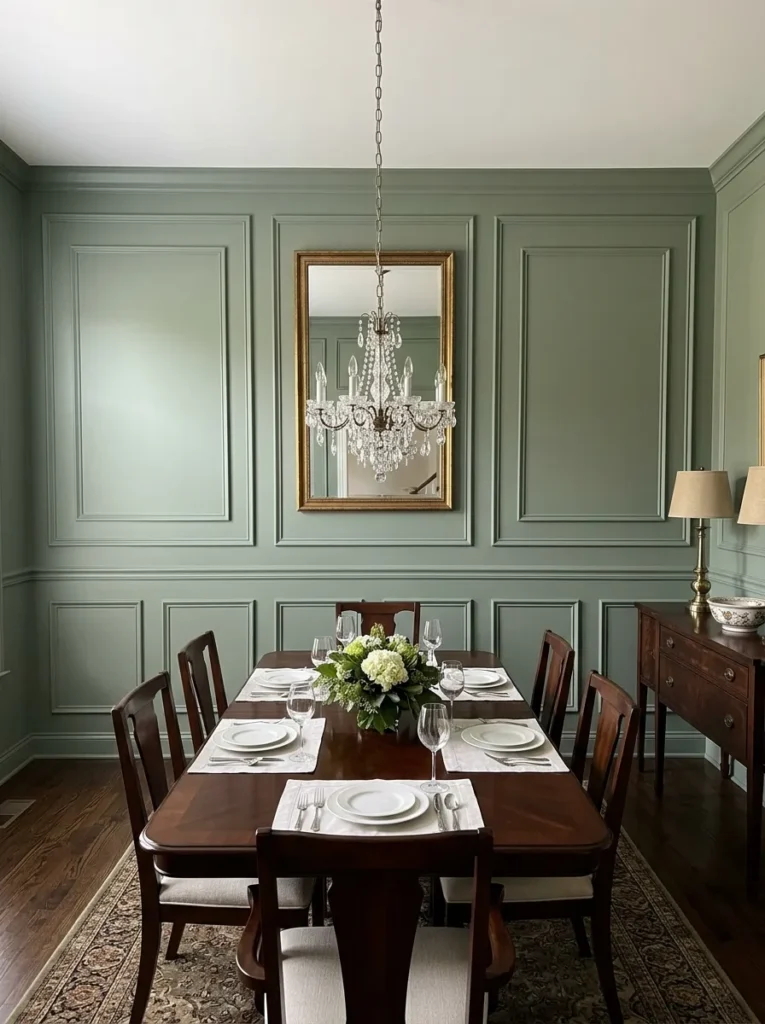
Measure each frame before cutting your molding pieces. Use a level to keep every line straight and maintain equal spacing between the frames. Once everything is installed, fill small gaps before painting. You can leave the frames empty or add small artwork inside selected sections.
15. Two-Tone Painted Wall
A two-tone wall gives you an easy way to add color without covering the entire wall in one shade. Paint the lower section a darker color and use a lighter shade above it. You can separate the colors with a clean horizontal line. This works well with modern and traditional dining furniture.
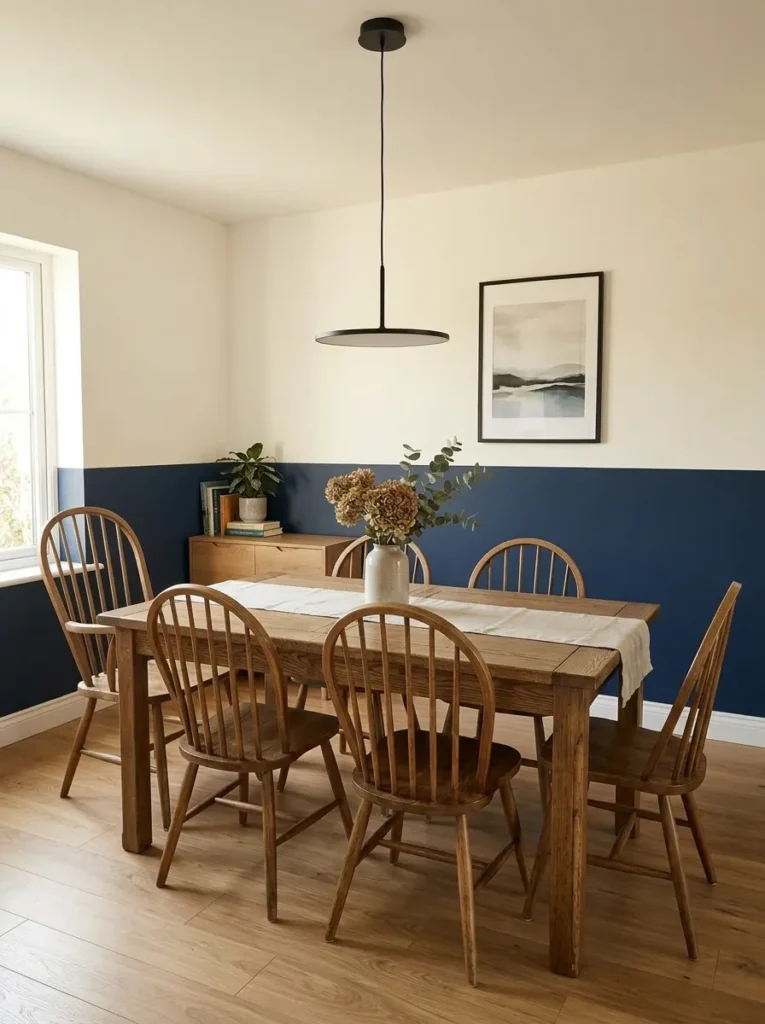
Measure the height of your color division before painting. Use painter’s tape to create a sharp boundary between both shades. You can also add a thin molding strip along the line for more detail. Choose colors from the same family if you want a calm and connected appearance.
16. Vertical Panel Accent Wall
Vertical panels can make your dining room wall look taller and more structured. You can use MDF panels, wooden strips, or ready-made wall panels for the project. Install them behind the dining table and paint them in one shade. This creates texture without adding a complicated pattern.
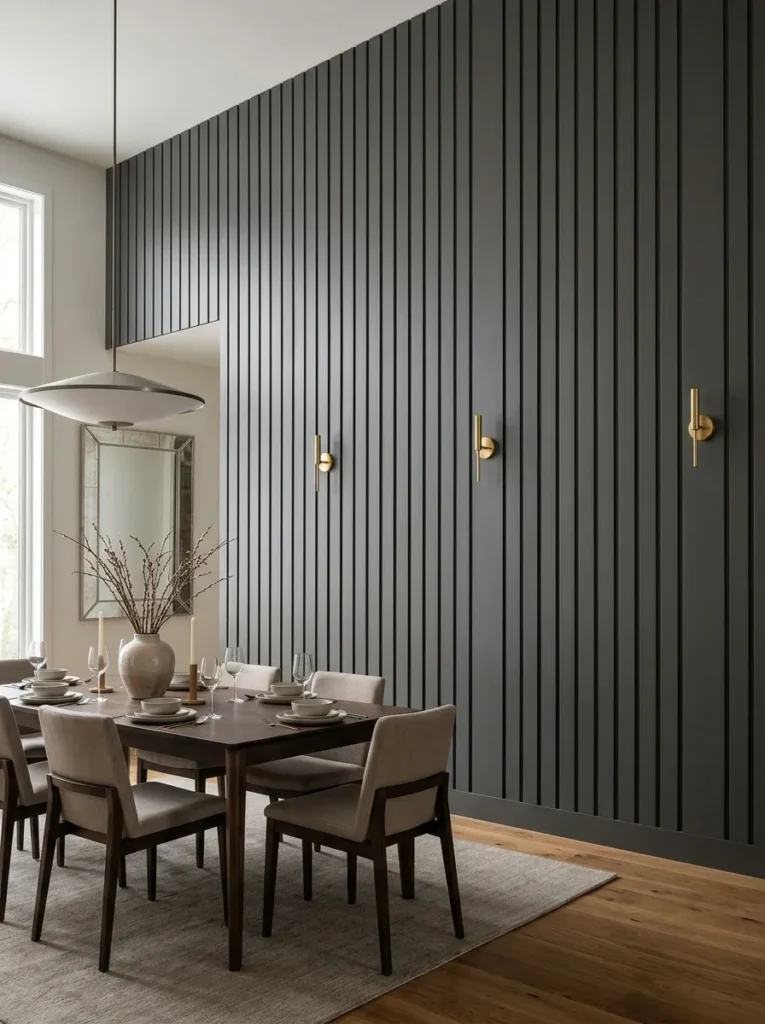
The panel spacing needs careful planning before installation. Mark every position on the wall and check your measurements several times. You can leave the panels in their natural finish or paint them to match your room. Add simple wall lighting between or beside the panels for extra detail.
17. Gallery Wall
A gallery wall lets you turn your dining room into a collection of personal memories and artwork. Use family photos, prints, small paintings, or simple decorative pieces. Arrange everything on the wall behind your dining table. You can use matching frames for a neat appearance or different frames for a more relaxed style.
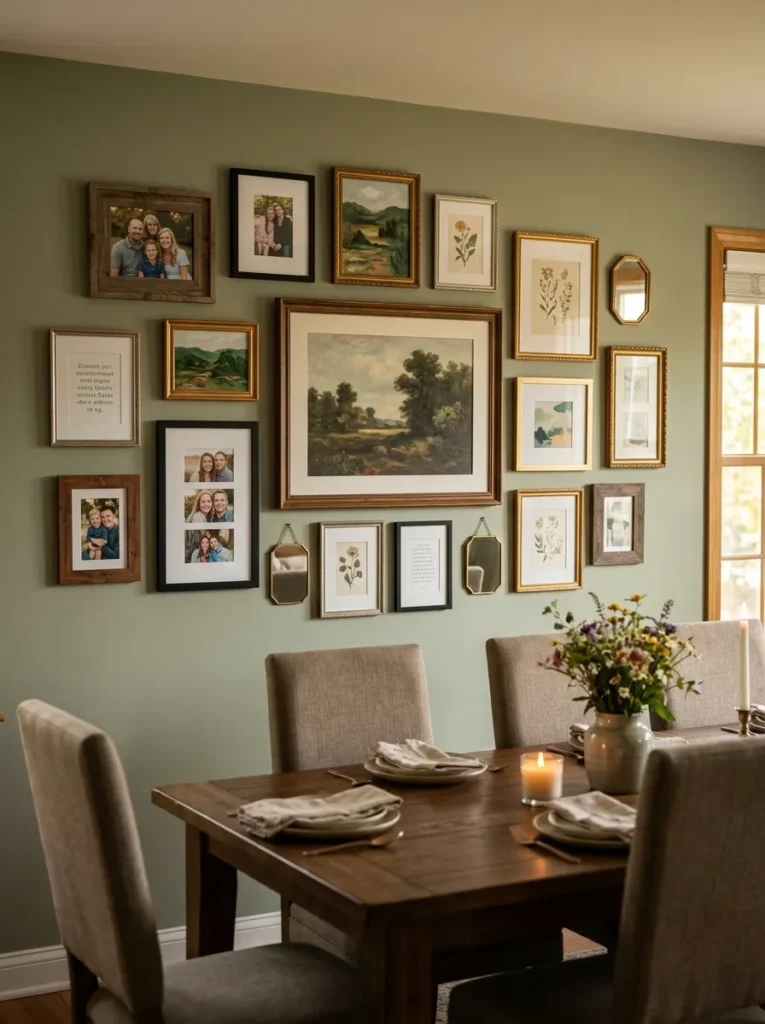
Lay the frames on the floor before hanging them on the wall. This lets you test different arrangements without making extra holes. Keep similar spacing between the frames so the display feels organized. Start with the largest piece and build the arrangement around it.
18. Vertical Green Wall
A green wall can bring a fresh natural touch to your dining room. You can use real plants if the wall receives enough light and you can maintain them. Artificial plants offer another option when natural light is limited. Place the greenery behind the dining table for a strong visual feature.
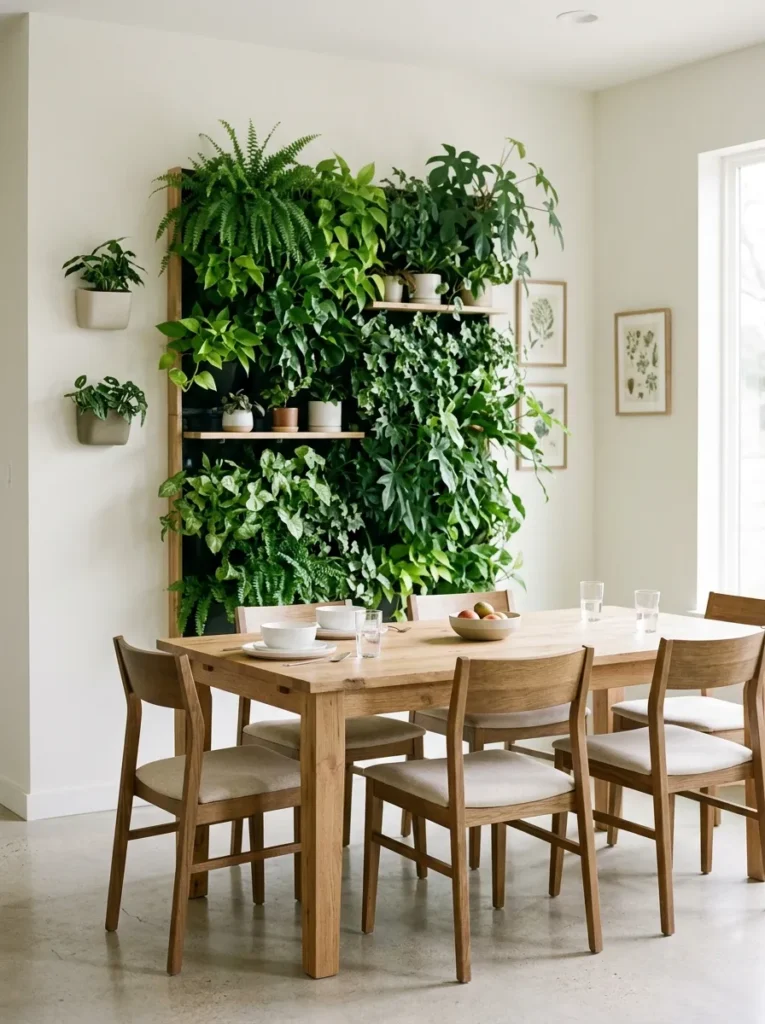
Use simple shelves, wall planters, or a vertical plant panel to create the arrangement. Make sure the wall can support the weight of your planters. Keep the dining table decor simple so the plants do not compete with too many other features. Green plants can also work nicely with natural wood furniture.
19. Arch Accent Wall
Painted arches can add a soft shape to an otherwise plain dining room wall. You can create one large arch behind the dining table or several smaller arches. Choose a color that contrasts gently with the main wall. This idea works well when you want something different without installing materials.
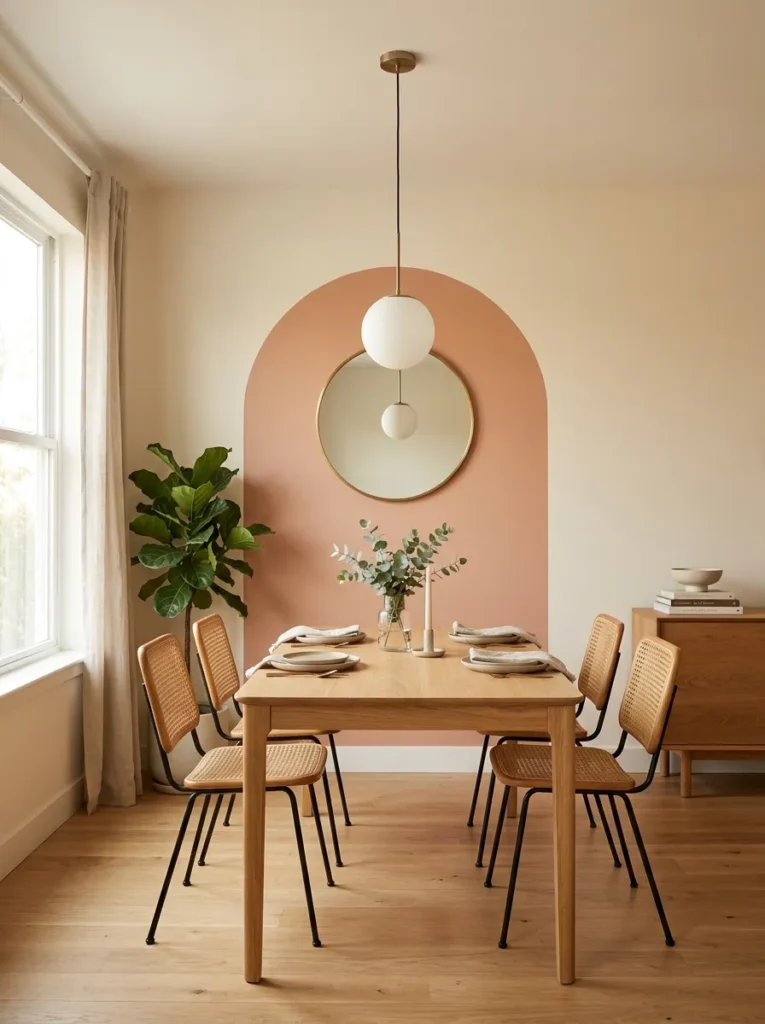
You can create the arch using simple household tools and painter’s tape. Mark the center point carefully before drawing the curved section. Use a small brush around the edges and a roller for larger areas. Add a mirror, shelf, or artwork inside the arch to complete the feature.
20. Textured Paint Accent Wall
Textured paint can give a flat dining room wall more depth and character. You can create texture with a special roller, sponge, brush, or texture product. Keep the color simple so the texture remains the main detail. Test your technique on cardboard before working directly on the wall.
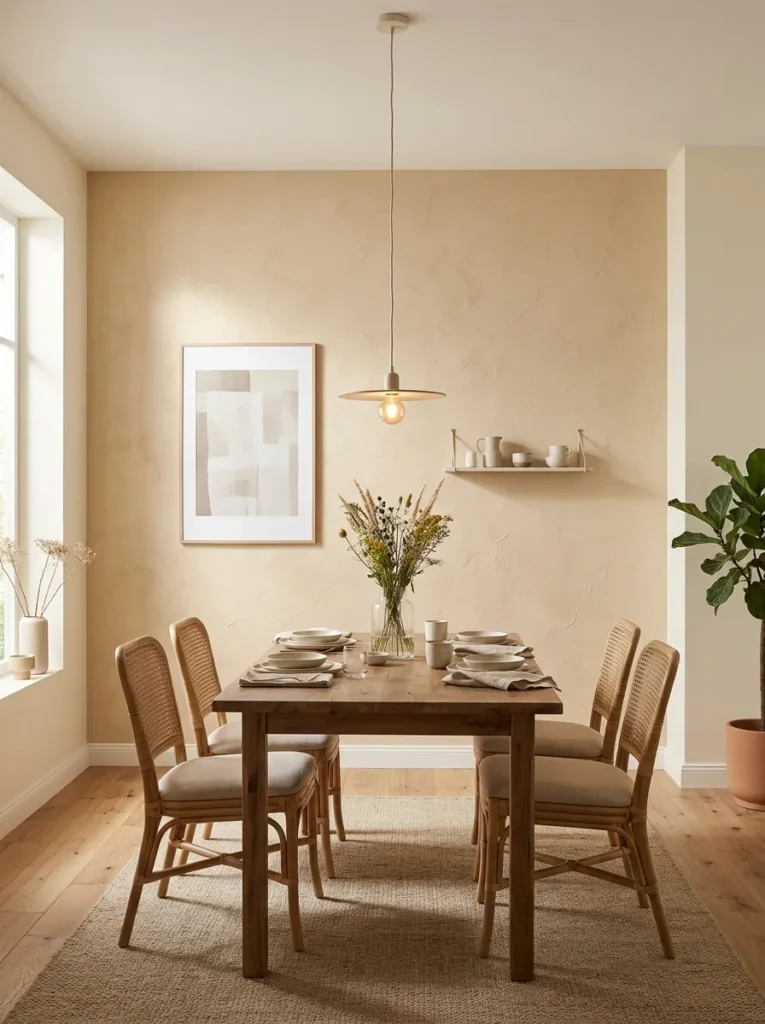
Work in small sections so the paint does not dry before you finish the texture. Follow product directions for drying time and application. Once the wall dries, check it from different angles for uneven areas. A warm neutral color can make the texture feel softer and more natural.
21. Wood Accent Wall in Farmhouse
A rustic wood wall can make a dining room feel warm and relaxed. You can use reclaimed boards, wood panels, or new boards with a distressed finish. For a more classic farmhouse look install the boards horizontally behind the dining table. Mix the wood with simple furniture to avoid making the room feel crowded.
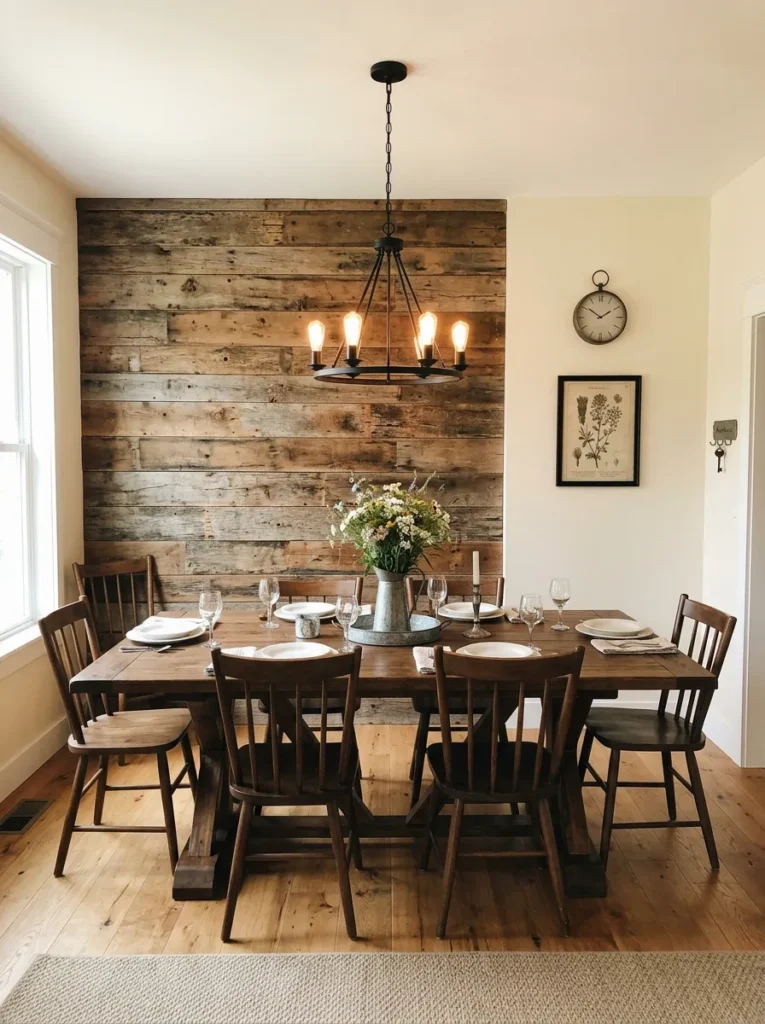
Check every board for damage, moisture, or loose sections before installation. Sand rough areas so they do not become a problem later. You can leave the wood natural or apply a clear finish to protect it. Add warm lighting and simple metal decor for a comfortable dining area.
22. White Shiplap Accent Wall
White shiplap can give your dining room a clean farmhouse-inspired appearance. The horizontal boards add texture, yet keep the wall bright. It goes especially well with wooden tables, simple chairs and black metal lighting. The wall behind your dining table makes a natural place for shiplap.
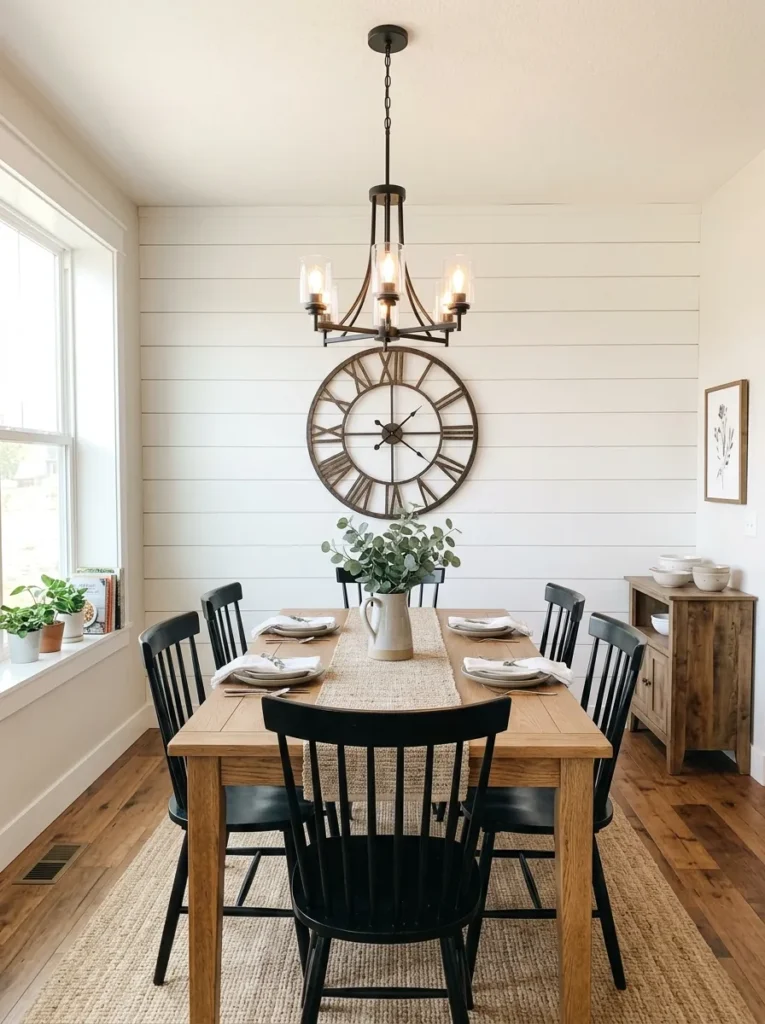
You can install real boards or use light weight shiplap panels for easier work. Before you start, make sure the wall is reasonably smooth. Maintain equal gaps between each board for a clean finish. If the wall needs another detail, add a large clock, mirror, or simple artwork.
23. Navy Blue With White Accent Wall
Navy and white can create a strong color combination for a dining room. You can paint the main accent wall navy and keep the surrounding walls white. White furniture or light wood can help balance the darker shade. Brass or gold-colored details can add another small layer of contrast.
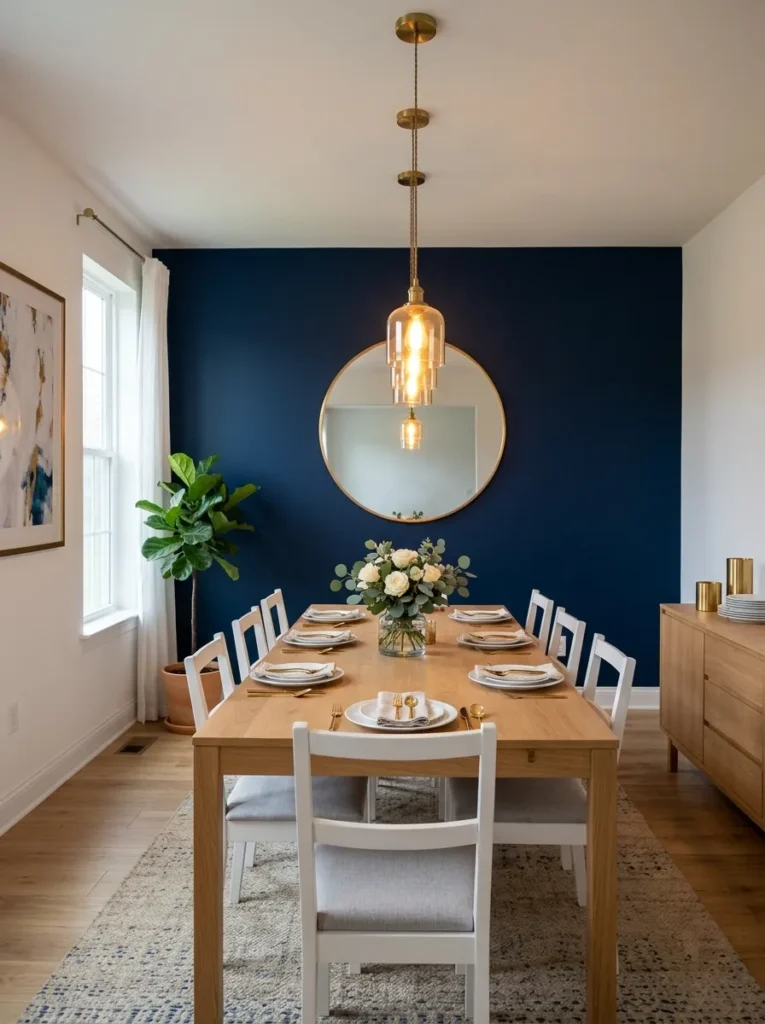
Use the navy wall behind the dining table to really make that the main focus of the room. Add warm pendant lighting above the table for a softer evening look. If the room gets little daylight, don’t add too many dark accessories. A large mirror will also help to reflect the light that you have.
24. Hand-Painted Accent Wall
A hand-painted wall can give your dining room a personal touch that standard paint cannot provide. You can create simple leaves, lines, flowers, arches, or abstract shapes. Keep the design simple if you are doing the work yourself. You can always add more details later if the first stage looks too plain.
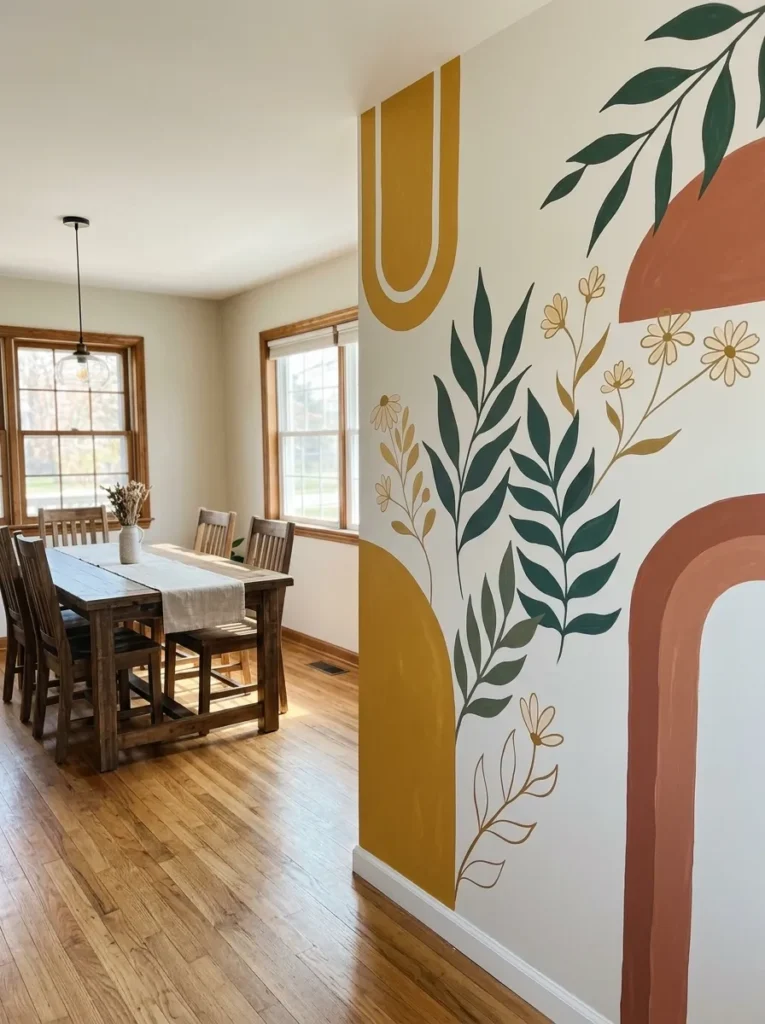
Sketch your design lightly with a pencil before applying paint. Use small brushes for details and larger brushes for wider areas. Keep a damp cloth nearby for quick cleanup. If you make a mistake, let the paint dry and cover the area with your base color.
25. Dining Room Accent Wall Artwork
Sometimes you don’t even need special materials for the walls. A large piece of artwork can turn a plain dining wall into a clear focal point. Choose artwork that matches your table, chairs, curtains, or other room colors. Place it at a comfortable viewing height above the dining table.
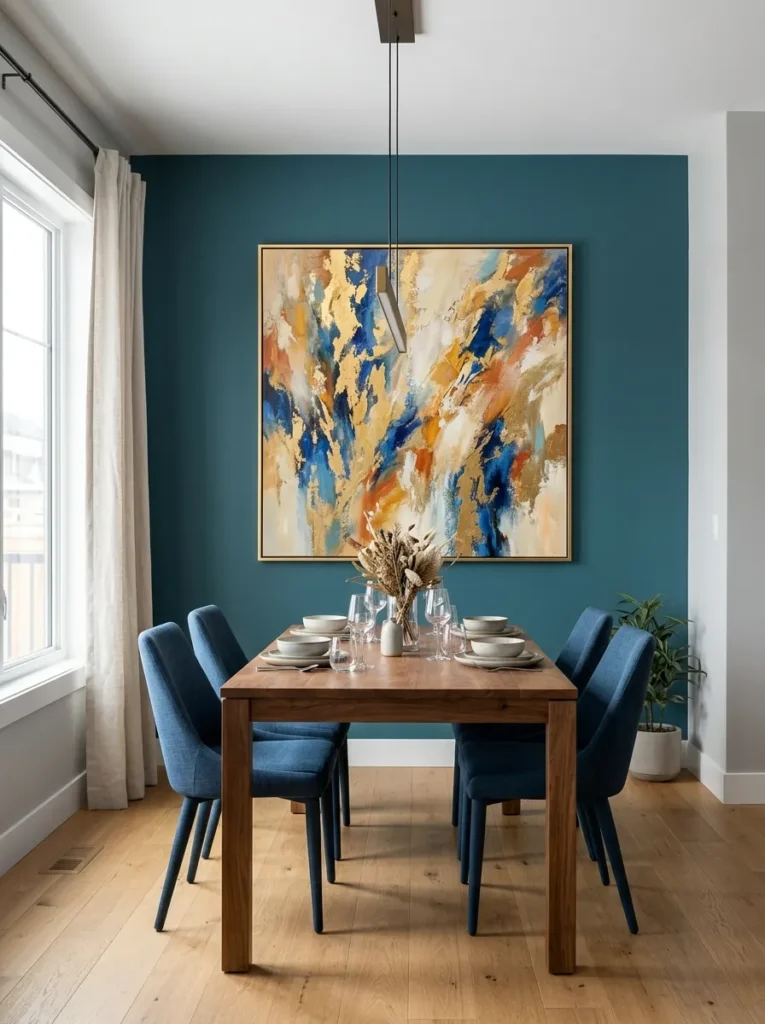
You can use one large painting or several smaller pieces together. Make sure the artwork does not sit too close to the table or chairs. Secure heavy frames with suitable wall hardware. This method also makes future changes easier as you can change the artwork without repainting the wall.
The END!
Your dining room accent wall does not need to be expensive or complicated. A fresh paint color, wood panels, wallpaper, artwork, or simple molding can change the room. Start with the wall behind your dining table and choose a style that works with your existing furniture.
Before you begin, check the condition of the wall, measure your space and plan your materials. Test samples in both daylight and evening light. A little preparation will save you buying the wrong paint or materials. Most of all, choose an idea you will enjoy seeing every time you sit down for dinner.